Click here for larger
|
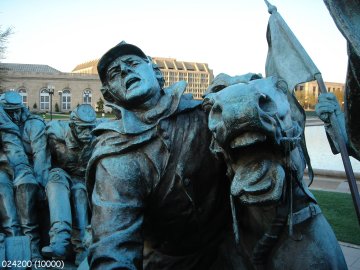
The expression of each figure of both groups is true to life. The expressions on the faces of the men in the Cavalry group range from the inspired face of the leader, flashing his sword on high, to the sardonic mien of the seasoned old cavalryman to whom one charge more or less makes but little difference. The flag bearer of this color squad shows the strain in his face of the speed with which he is riding against the wind with his flag fluttering in the breezes, while the fallen trooper expresses physical pain, the agony of suspense, and with it all a Spartan determination.
[Editor's note: To me, the flag bearer doesn't look strained. I would label him as the 'seasoned old cavalryman to whom one charge more or less makes but little difference. Nor does he look to be moving with much speed.] Comparing a recent photo of the fallen trooper to the one shown in the 1924 book (between pages 38 & 39) illustrates the dulling effect of decades of oxidation. In the 1924 picture, the trooper does indeed look full of emotion. Not so much anymore.
|
|
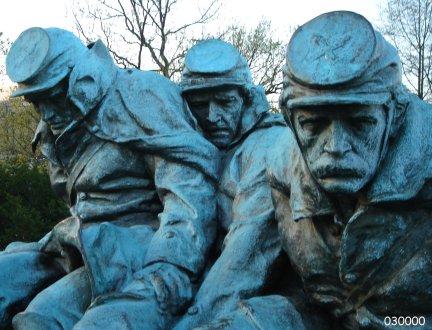
The men on the gun carriage present three studies of expression that are most interesting. The figure to the right with coat collar upturned is holding grimly to the gun seat, and seems to have no thought other than to keep his equilibrium [notice the hand on the center man's leg -- perhaps he has a thought to comfort his compatriot (Ed.)]. The central figure has a face that is drawn with physical effort, and seems to depict the utmost weariness, while the man to his left has an expression of intense interest in all that is going on. His eyes seem to be drawn on beyond the plunging horses to the battle line to which the gun is being pushed. His look is quizzical, analytical, and deeply studious.
|
Click here for larger
|
Click here for larger
|
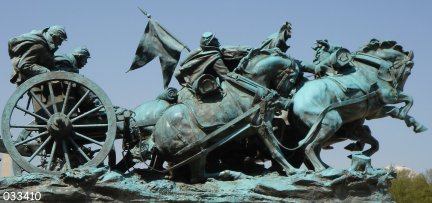
Even the ground over which the Artillery and Cavalry groups are passing has not been forgotten. The terrain is shown to be deeply rutted, and each group seems to be coming from a copse of woods up to the battle line. Stumps of trees [see lower right corner of image at left (Ed.)], fallen branches, here a broken saber, yonder a rifle with bayonet affixed, a canteen with its frayed strap, and other battle debris heighten the realism of activity, and again demonstrate the sculptor’s genius in his capacity for taking infinite pains in every detail, and yet properly subordinating each element to the other to produce a most imaginative and harmonious whole.
[Nowhere can I find any of this debris save 2 rifles. No canteen, no bayonet, no saber. Vandals? (Ed.)]
|
